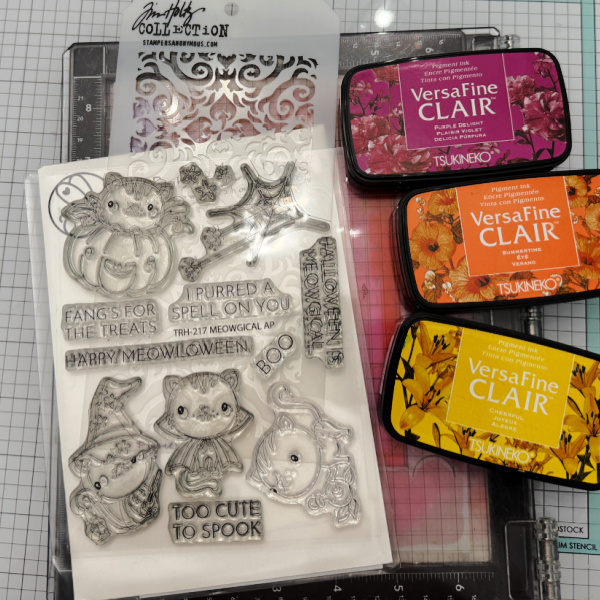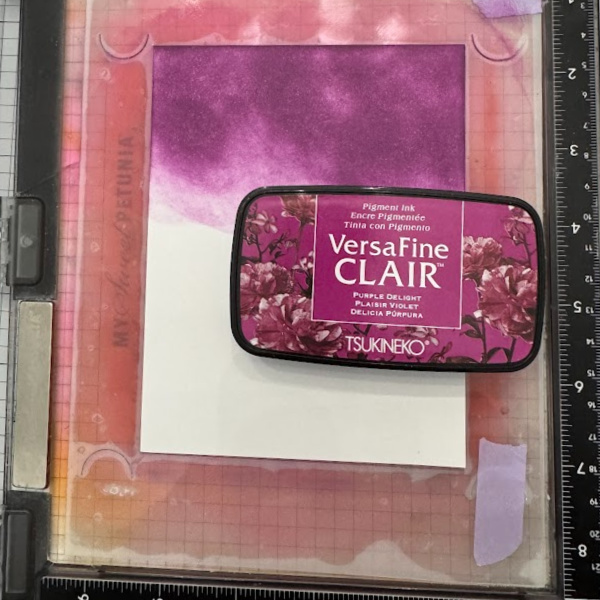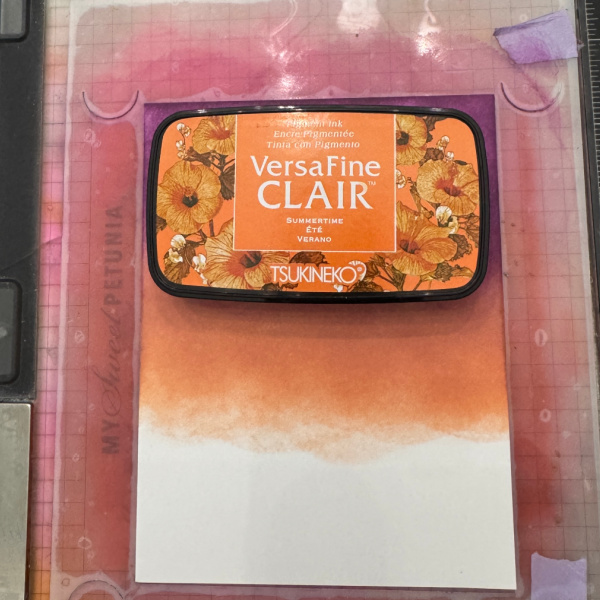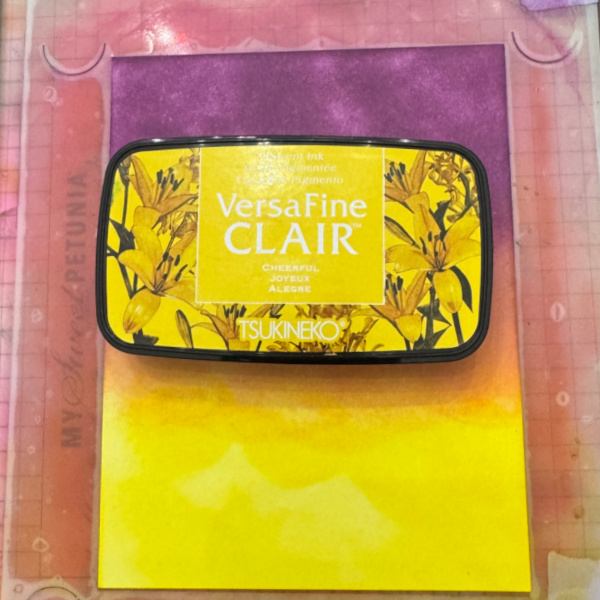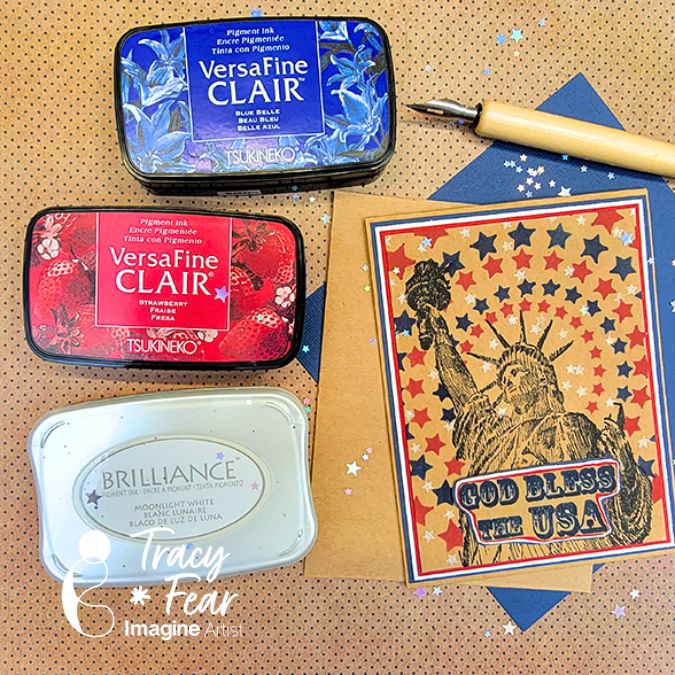
Hello Friends! Tracy here and today I am excited to share this rustic and patriotic card with just 4 inks! In today’s video tutorial I am sharing how I created this card using a masking technique, some stamping, and some stenciling! Tracy
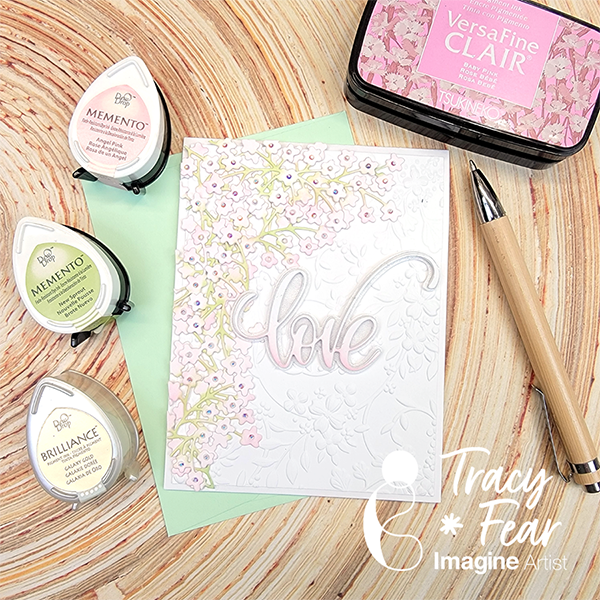
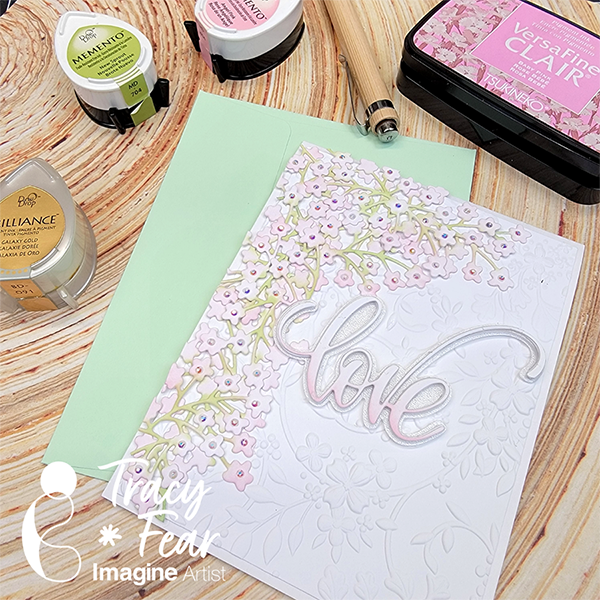
Hello Friends! Tracy here and today I am excited to share this elegant and dreamy card to please any new couple! In today’s video tutorial I am sharing how I use Memento, Delicata, and Versafine inks to color die cut very softly keeping things light and airy!
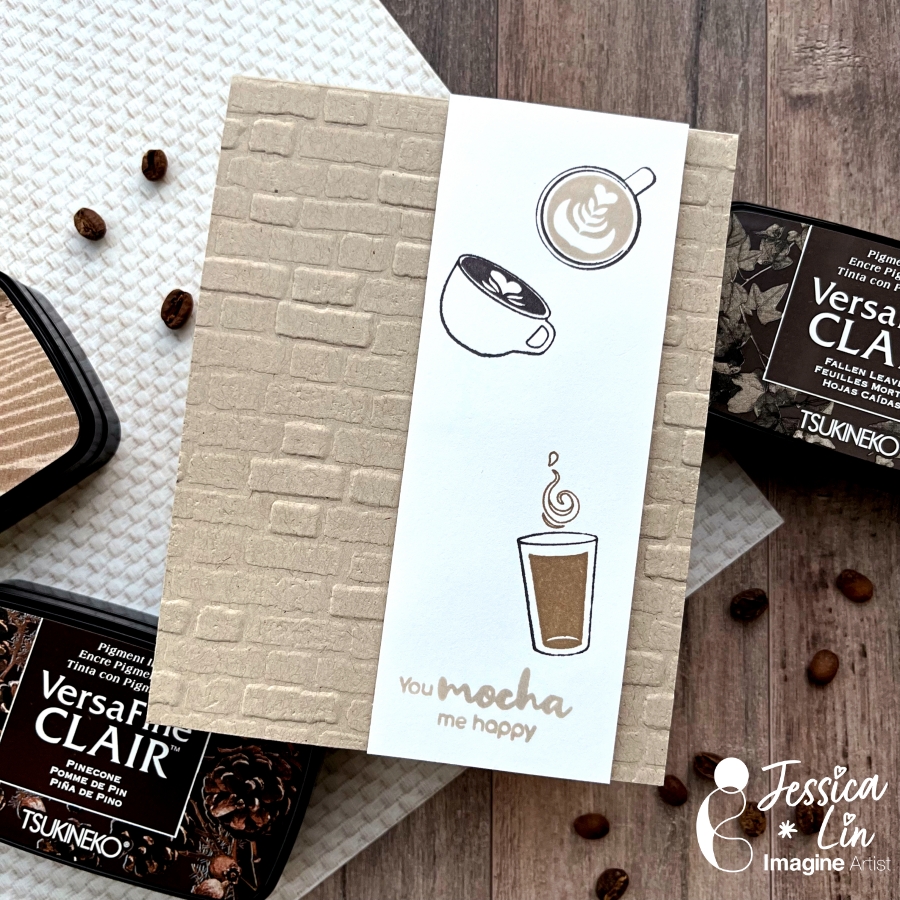
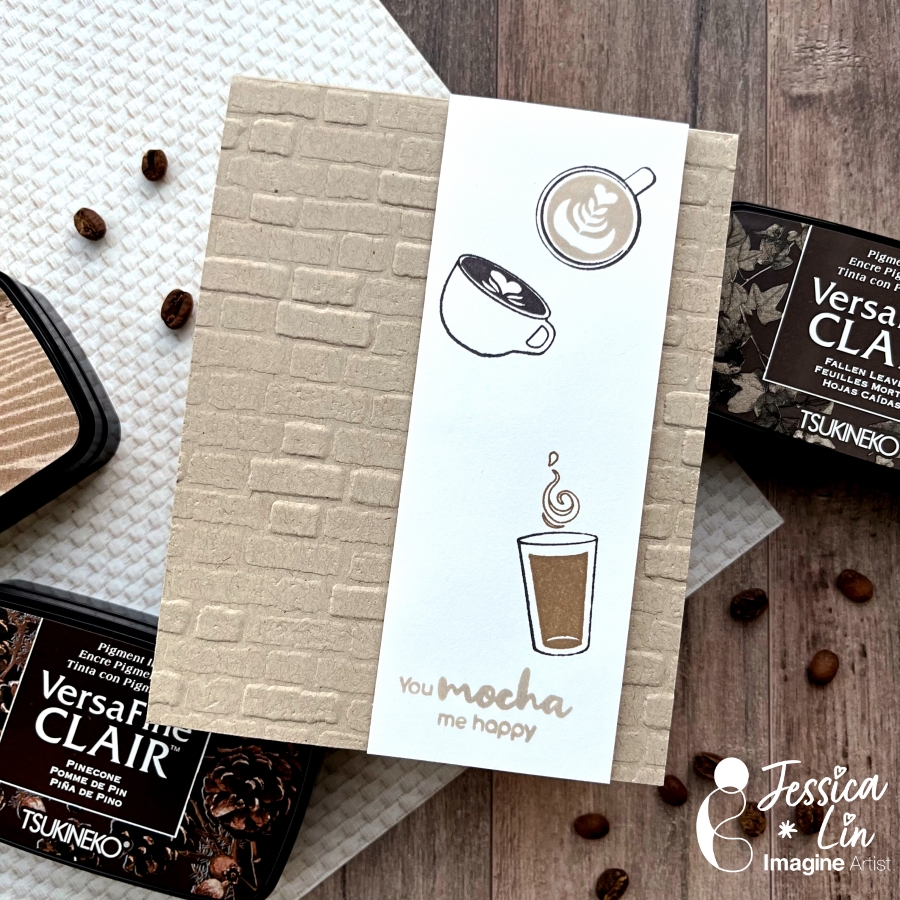
Hi everyone! It’s Jessica here. Today’s project is inspired by the Pantone color of this year – Mocha Mousse. It is such a warm, rich shade that is perfect for a coffee card! I decided to compare the different brown and earthy tones in the VersaFine Clair ink line as well. There are many options to choose from, and each is special on its own.
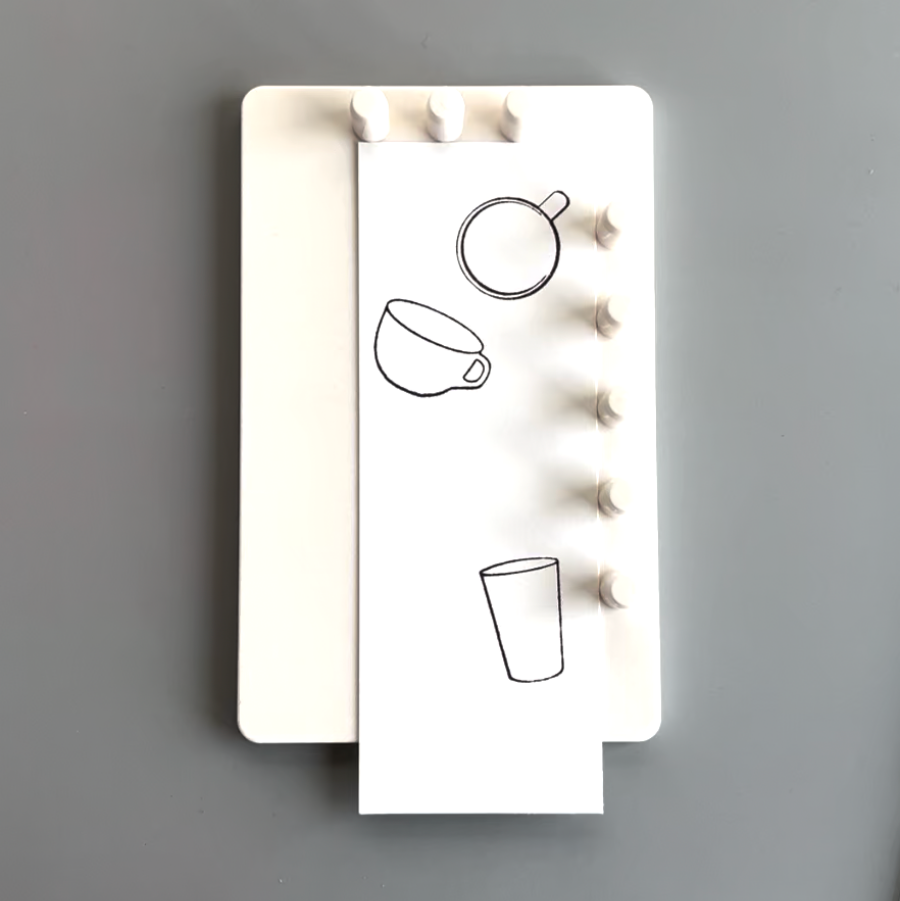
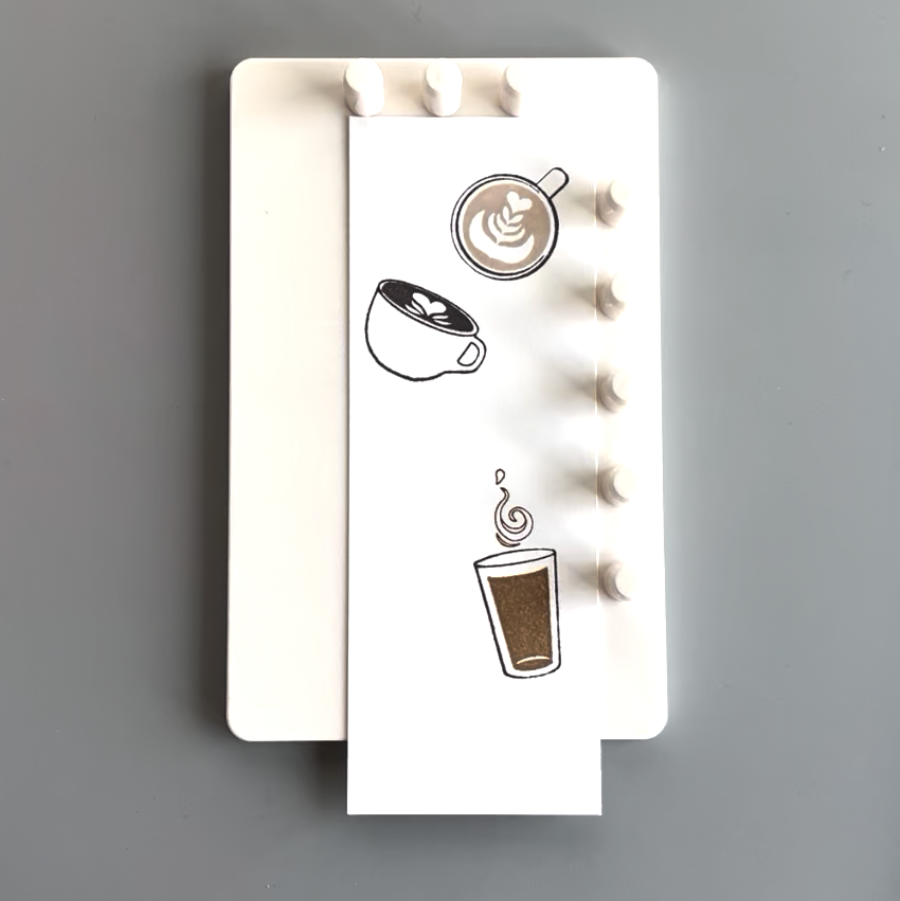
Step 1: Today I will be using an acrylic stamp set from iCrafter. It is called Latte Coffee and has several sets of coffee cup images. Since the image outlines are superfine, I chose VersaFine Clair inks to stamp with to ensure crisp, clean images. I typically stamp the outline images with Nocturne (the black color of this ink line). However, when I was experimenting with the colors, I found that Fallen Leaves is a great alternative. The dark brown color adds more warmth than black and complements the other earthy tones well. I love VersaFine Clair inks and use them very regularly, but Fallen Leaves was probably the one I reach for the least. I think I will start using it to stamp outline images from now on!
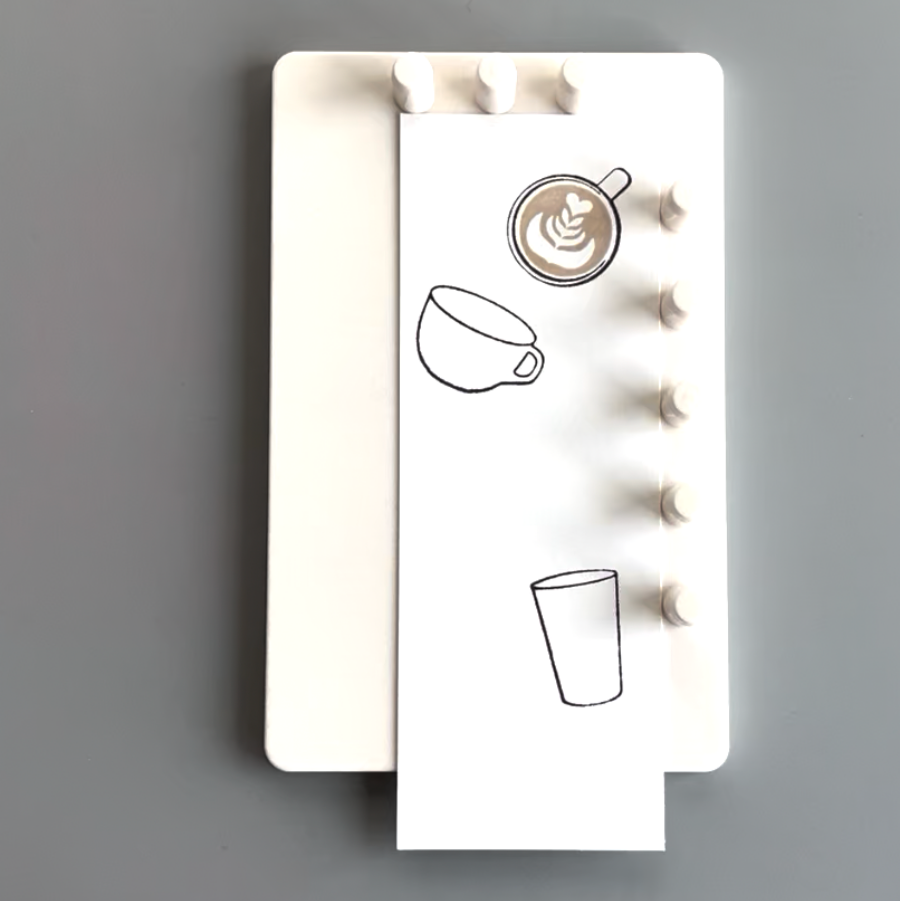
Step 2: I used Sand Dune to stamp the first latte art image. This is one of the newer VersaFine Clair colors. I am really happy that they added a lighter earth shade to this collection.
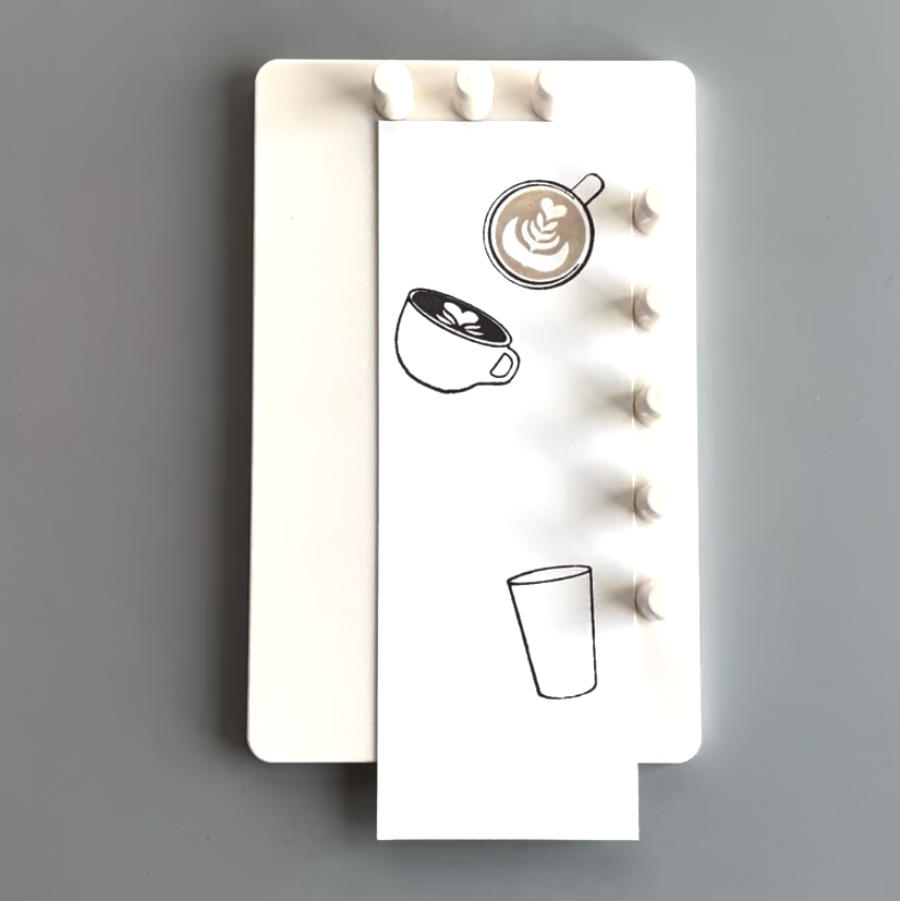
Step 3: For the second latte art stamp, I used Pinecone. This is also a rich, dark brown color. It is just a bit lighter than Fallen Leaves.
Step 4: I used Acorn for the bottom coffee image with the swirl. It is a great middle-tone that completes the brown color gradient.
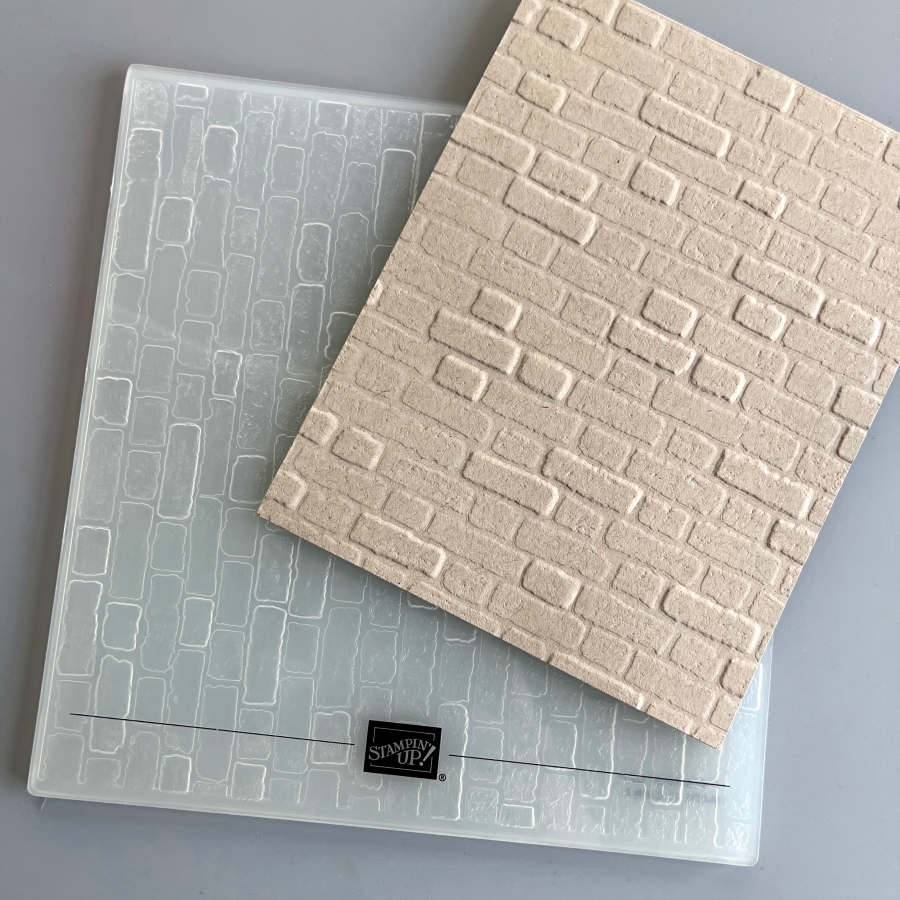
Step 5: Today’s card is simple and beginner-friendly with easy layered stamping. However, you could also add a little flair by embossing the front panel of the card base. Embossing folders are easy to use and add such a great wow factor to your project. The one I am using today is called Brick & Mortar. I think it reminds me of the walls of a cute coffee shop!
Step 6: Finally, I stamped this super cute sentiment with Sand Dune, and that completes today’s coffee card!
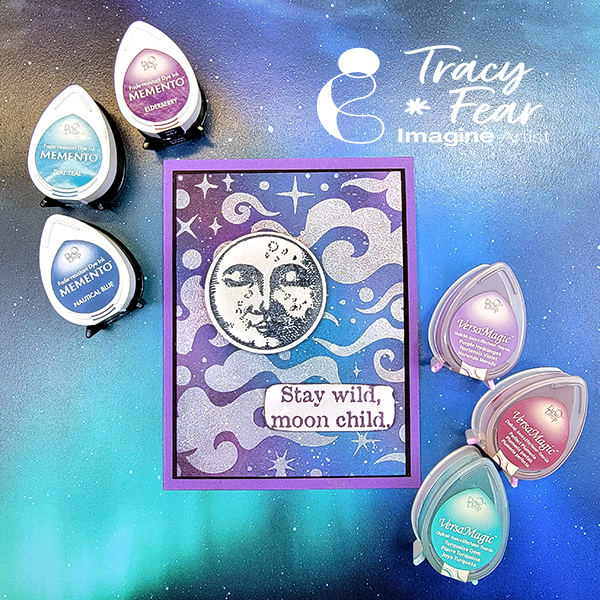
Hello Friends! Tracy here and today I am excited to share this really easy galactic, out of this world background technique!
In today’s video tutorial I am sharing how I use some Memento, VersaMagic, Brilliance, and VersaFine Clair inks to create this stunning card along with a paint pen, a stencil from my stash and some holographic embossing powder!
Hello crafty friends! One of my favorite cardmaking techniques is heat-embossing resist. Today, I want to share with you how to make these Batik cards using this technique. It is a technique you can use to create fun and colorful backgrounds with heat embossing and ink blending.
Let’s get crafting!
Skill: Beginner Time: 20 minutes
Direction:
Step 1 Cut out a piece of 8.5 inch x 11 inch white cardstock into 4 panels of 4.25 inch x 5.5 inch.
Using a blending brush, add some of the VersaFine Clair Avocado ink to one of the white cardstock panels.
Dry the ink on the cardstock with a craft heat gun.
Step 2 Add some of the anti-static powder all over the inked panel.
Stamp the images with VersaMark ink and add some of the clear embossing powder. Heat the embossing powder with a craft heat gun.
Using a blending brush, add some of the VersaFine Clair Grass Green ink on the panel.
Carefully dry the ink on it, not to make the embossed images melt too much. Let it cool down before touching it. Gently wipe off the extra ink with paper towel.
Step 3 Add again the anti-static powder on the panel.
Stamp the next images with VersaMark ink and add some of the clear embossing powder. Heat the embossing powder with a craft heat gun.
Step 4 After heating up the embossing powder, crumble the cardstock. Depending on the cardstock you use, you can spray the back of the cardstock lightly with water and then crumble it.
Flat it back on the craft mat and use the bone folder to smooth it down. You won’t get perfectly smooth cardstock back but the crumble lines are the one that will give the texture that we need for the batik look.
Step 5 The next step is adding more color to the panel!
Use the blending brush, add some of the VersaFine Clair Spruce ink on the panel.
You will start to see the pattern. Add more ink if needed to get more contrast between 3 colors.
Use a paper towel to wipe off the extra ink off the embossed images.
Step 6 On a piece of white cardstock, stamp the sentiment with VersaFine Clair Nocturne ink.
Dry the inked sentiment with a craft heat gun.
Step 7 Use a paper trimmer to trim the sentiment into a label size and punch a hole on one of the side.
Use a paper distress tool or a knife to distress all the edges of the background panel.
Step 8 Add the background panel on the card base using On Point Glue.
Wrap around some of the burlap twine on the card, before tie it up, add the sentiment label on the card. Put the tail of the burlap twine through the label hole. Glue the sentiment on the card with some white foam and Tear It! Tape.
Tie up the burlap twine into a bow.
This Batik cardmaking technique works well with solid images because of the heat embossing resist effect. You can pick any 2-3 colors of inks you can use that compliment each other.
Here’s the different look of the Batik card I made using the same heat embossing technique but simpler. So, instead of multiple times heat-embossing the images and blending the inks, this one is only once. Here’s the simpler steps:
First, heat emboss the image directly to the white cardstock panel.
Second, crumble the cardstock, flat it out back using a bone folder.
Third, using blending brush add the ink on the cardstock starting with the light color, medium color, then dark color.
I hope you will give this Batik technique a try and play around with different colors. Thanks so much for stopping by our blog today.
Hello Crafty Friends! It’s Ceal, here. Today I am sharing how I made this faux stained-glass Christmas Card.
Skill Level: Beginner Time: 30 Minutes
Directions:
Gather your supplies. You will three inks, Pink, Yellow and Blue. A blending tool, a silhouette die along with black, white and gold cardstock.
Step 1: Cut the nativity die out of black cardstock, the backer out of white and the star out of the gold cardstock.
Step 2: On the backer using a sponge or other blending tool, blend the blue around the outer edge of the panel and the pink and yellow inside the blue.
Step 3: Line up the nativity over the backer and adhere it down with On Point glue. As you can see in the photo above, I use the corner of the MISTI to help me line things up.
Other Products: Misti 2.0 – My Sweet Petunia Nativity Die – Stampendous White Cardstock – CutCardStock Black Cardstock – Hero Arts Gold foil cardstock – Erin Lee Creative