
Learn the Basics of Stenciling

by Iris Rodriguez

Learn the Basics of Stenciling

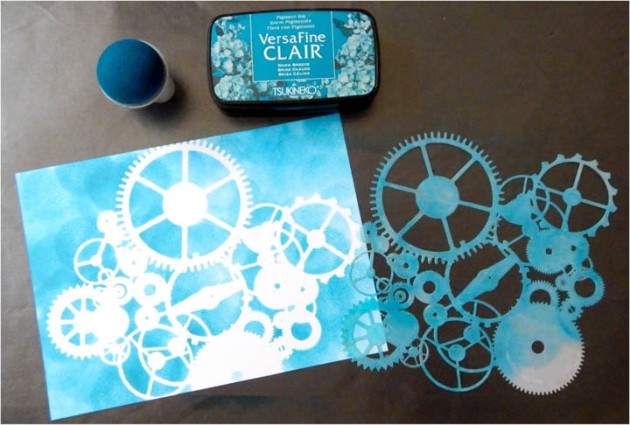
Stencils are a great tool to use for creating images and effects on just about any creative project. You can decorate a  journal with them, create card backgrounds and textures, use in your paintings, or in home décor projects. Imagine’s inkpads, inks, sprays, and texture mediums can all be used with stencils. In addition, Imagine has you covered with applicators such as Sponge Daubers, Palette knives, and Stipple brushes. In this article, I’ll discuss some ways to organize, use with different products, proper care and cleaning your stencils.

Organizing Your Stencils

There many ways to organize your stencils. One excellent way is to search crafting, office and home goods stores for options on storage containers. Whichever you choose, it’s important to lay them flat. I think on of the best ways to keep them flat is to use dividers in storage bins or drawers. File folders can be found in office supply stores. Label your dividers by type, theme, or designer. Another way to store stencils in a three-ring binder book inside plastic page protectors. Place color cardstock paper so that you can see the stencil and maximize storage by storing two stencils on one sheet.

If you have an open crafting space then hang stencils with metal hook clips on a rack. I like the idea of hanging my stencils because I can easily go through them and find what I am looking for. I punch a hole in the corners of my stencils and place them in a binder ring.

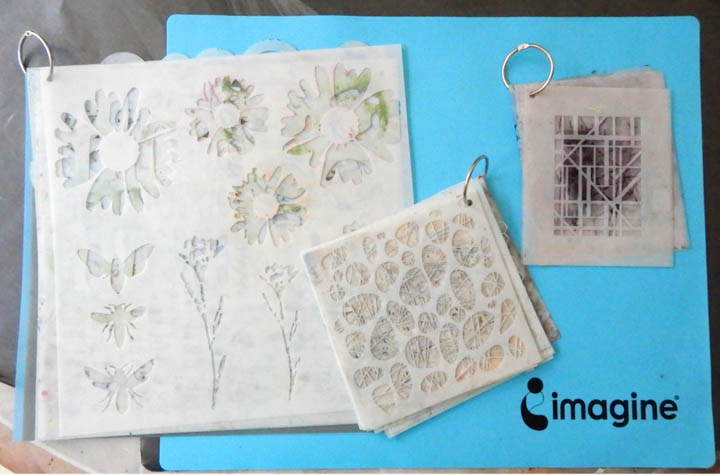
I have an IKEA wooden shelving unit to store my crafting storage bins. I’ve attached long screws on the side to hang my stencils. Hanging them freed up space and I can easily access them. Some alternatives are to hang them on a clothes hanger with a metal hook or binder clips, store them flat in bins or drawer or hang them on revolving wire three-tier shoe rack with a metal hook or binder clips.

Stenciling with Imagine Inks

Imagine’s Inkblushers and Sponge Daubers work great with stencils because the soft sponge material presses ink down past the edges of the stencil’s details. The sponges produce sharp edges and finely detailed inking better than most other tool. If you have a highly detailed stencil, the sponge materials are especially handy for getting into small and intricate opening, or getting around the tight areas of the stencil.

Stenciling with All-Purpose Ink and Inkblushers. Add a couple of ink drops to your crafting mat and pounce the Inkblusher over the ink. Inkblushers are highly absorbent and work well with Imagine’s All-Purpose Inks.

Inkblushers can also be used to stencil with acrylic paints. Like with inks, you can get clean edges and good detail. Wash the Inkblusher under running water immediately. If you cannot get to the sink right away, wipe off as much paint as you can and then keep it in water, like your paintbrush water. If left out without being washed, the paint will dry and harden the Inkblusher. Unfortunately, the paint cannot be washed out. However, all is not lost; only the area that had the paint will harden, and not harden the entire sponge. Using your scissors, cut off the piece with the hardened paint and continue to use.

Imagine’s Jumbo Daubers provide fine detailed inking. The handle allows you to have great control and pressure over the stencils. Imagine’s Jumbo Daubers also work great Acrylic paints. Add a few drops of paint to your craft mat, pounce the Dauber on the paint, then pounce the Dauber onto a clean area on your mat. Get the paint evenly on the Dauber and avoid globs of paint. If you get too much paint on the Dauber, it will go under the stencil.
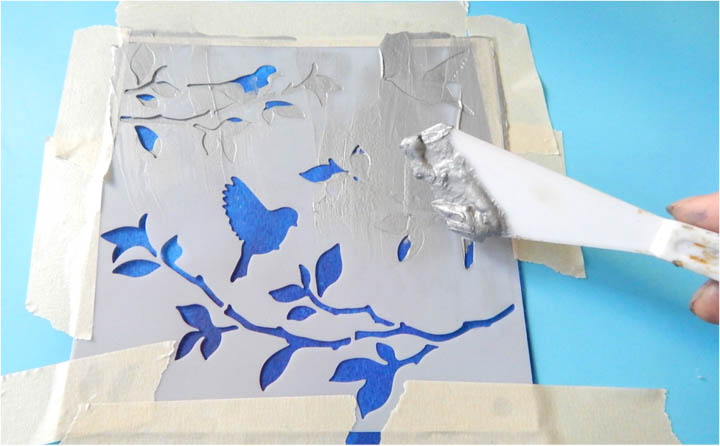
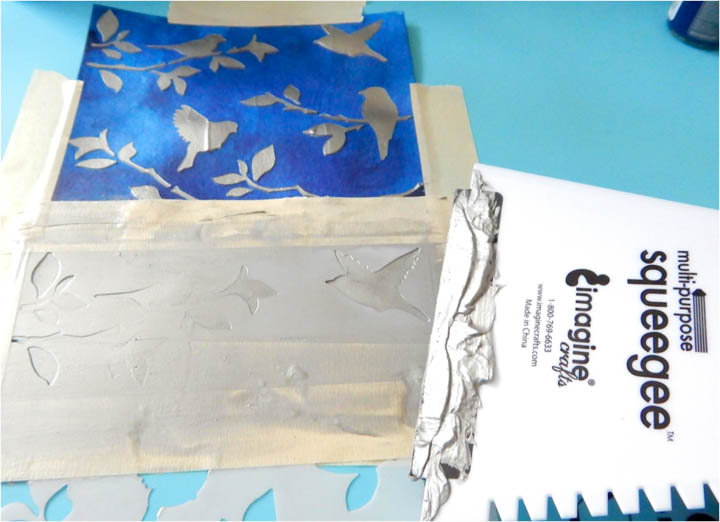
Imagine’s Creative Mediums are smooth acrylic pastes that provide yummy textures for any project. This is where stencils are very different from stamps because you can create an image with texture. Use Imagine’s palette knives and Squeegee to add the Creative Medium. Silver Metallic Creative Medium using a palette knife. Imagine’s Multi-purpose Squeegee has a wider surface; perfect for using with larger stencils with large openings. Use a palette knife to add the medium onto the Squeegee.
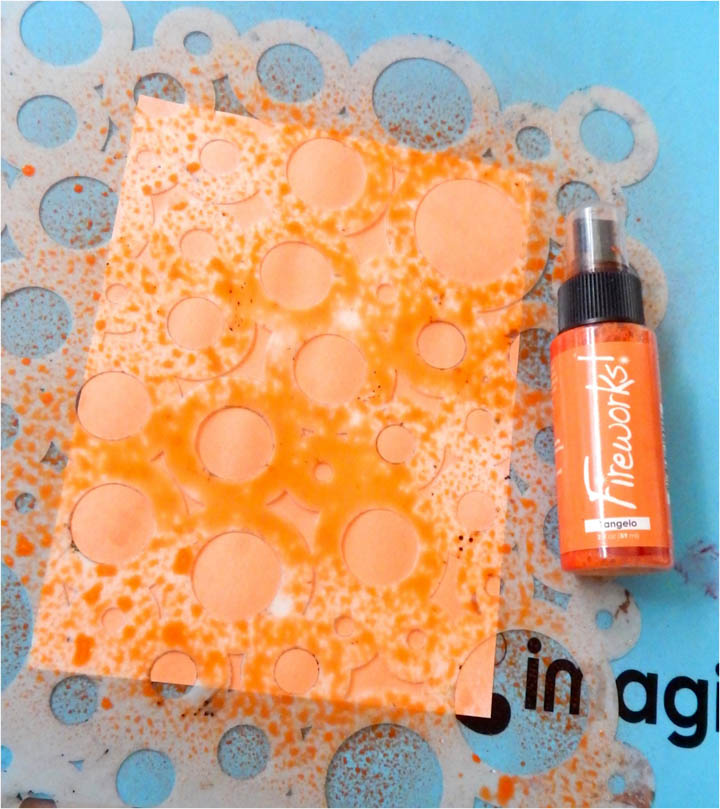
Imagine’s Fireworks Craft Spray makes stenciling a breeze. To get clean patterns, start spraying from the outside edges of the paper and spray inwards. Change up the starting point and spray. By starting from the outside, avoids harsh spray edges or heavy splotches of ink. Clean up is easy, simply wipe off your stencil and craft mat with a dry paper/cotton towel. To double down on the stencil effects you can “stamp” the wet ink from the stencil onto another piece of cardstock.
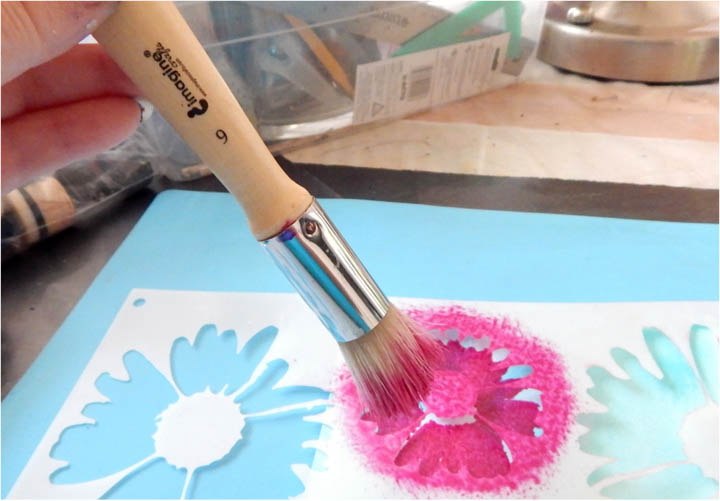
Create unique effects with Imagine Stipple brushes. These brushes have a flat, firm bristle head for stippling. It can be used on just about any surface. They are great for stenciling on fabric for getting into the grain. This creates patterns of fine dots by pouncing the brush onto the substrate. Scumble by brushing at a slight angle in a random fashion. This creates brushstrokes and because of brush’s firm bristles, it won’t get under the stencil.

Cleaning the Stencils
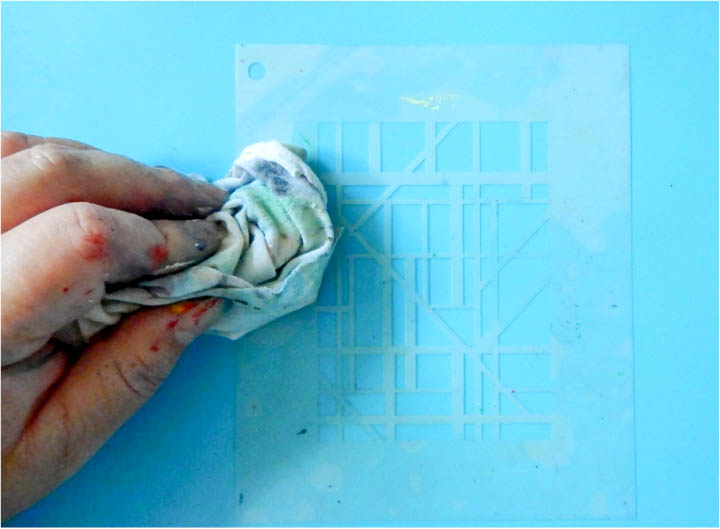
One of the hardest things about working with stencils is cleaning them. Even so, keeping your stencils clean will help to maintain clean edges, last longer and you’ll have a clean stencil for your next project. The key to success for keeping stencils clean, regardless of the medium, is to clean them immediately with a wet paper/cloth towel or baby wipe. Depending on the medium you will have ink/paint residue.

When using pigment inks, All-Purpose Ink, or dye inks, wipe the stencil immediately with a wet paper/cloth towel, or baby wipe. Since these inks are water-based the stencil will clean up quickly and completely. When using permanent inks, simply wiping the stencil off with water, will not get it clean. Use a stamp cleaner or Rubbing Alcohol to clean your stencil. Imagine’s StazOn All-Purpose Stamp Cleaner works well for cleaning ink off your stencils. Dab the cleaner on the stencil and wipe with a dry paper/cloth towel. The cleaner tends to leave a little bit of an oily residue. Simply wipe it off with a clean wet paper/cloth towel.
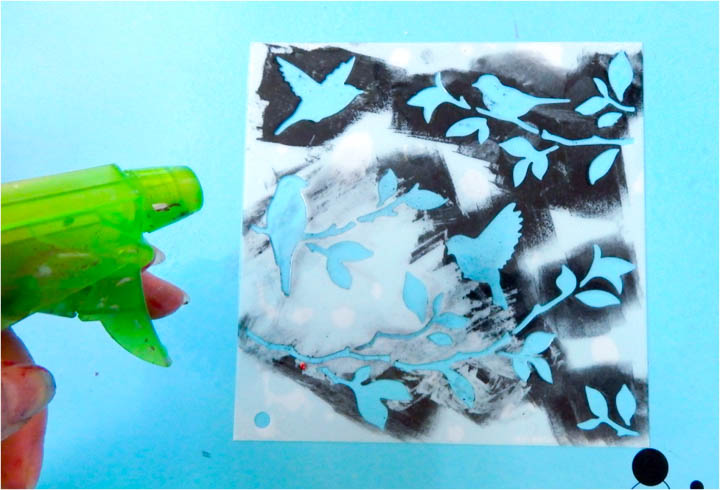
Acrylics paints are harder on stencils than inks. Acrylic paint can leave heavy buildup on your stencils and distort the edges. As with inks, clean the stencil immediately after using with a wet paper/cloth towel or baby wipe. Get as much paint off of it, as possible.

Use a cleaning or nail brush and soap to clean your stencils. Mix handwashing/dishwashing or Artist Painter’s type soap with water in a container. Dip the brush and scrub the paint off the stencil. Lay the stencil flat and rub gently, avoid bending the openings.

Sources

http://www.shellybailey.com/2014/03/project-life-2014-title-page-and.html

Source: https://www.sadieseasongoods.com/stencil-storage-magazine-rack/

Source: http://www.arthappy.me/paint-storage-display-idea/

Source: http://www.arthappy.me/paint-storage-display-idea/

Use Fantastix to Create Your Own StazOn Marker

by Jennifer Vanderbeek

Use Fantastix to Create Your Own StazOn Marker

Creating your own, custom, StazOn Markers is as simple as the three Ss: Smoosh, Spritz, and Soak! Smoosh the ink on the craft mat, Spritz the StazOn cleaner, and Soak with the Fantastix. By using StazOn All-Purpose Stamp Cleaner to make the StazOn ink more fluid, you can vary the strength of the colors in your markers to create a greater range of colors. This way the StazOn colors you love on the pad can be used to color in your favorite images. See how I demo this in today’s YouTube tutorial.

Supplies

Imagine
Other
  • Simon Says Stamp – Floral Bliss
  • Cardstock

Color of Month for July is Golden Glow

Color of Month for July is Golden Glow

The Color of the Month for July is Golden Glow. We love gold and with summer in full gear, the golden glow of the summer sun shines down on all of us! We are reminded of golden fields of wheat, fun in the sun, vacations and wedding parties. With cardmaking and scrapbooking gold is an essential element to any crafter’s toolkit. Imagine and Tsukineko offers several products to help achieve the metallic shimmery shine such as Delicata in Golden Glitz, All-Purpose Ink in Vegas Gold, and don’t forget a Brilliance DewDrop in Galaxy Gold! In the meantime, we have a couple of sneak peeks of this months beautiful golden glow tutorials for you!


Here is a sneak peek of what we have in store for July!

Keep your eye out for this fun cardmaking tutorial by Jowilna Nolte

Such fun techniques to learn from this upcoming tutorial by Kyriakos Pachadiroglou


Product Recommendations for Gold

Delicata Inkpad – Golden Glitz

All-Purpose Ink – Vegas Gold

StazOn Studio Glaze – Gold

Brilliance DewDrop – Galaxy Gold


Add This “Gnome Is Where The Heart Is” to Your Journal

by Elina Stromberg

Add This Gnome Is Where The Heart Is to Your Art Journal

When I first saw the cute gnome stamp set by Joy Clair, I immediately knew what I wanted to create with it–a collage with bright colors! The ‘Gnome Is Where the Heart Is’ stamp set was just perfect to be used in my new Moleskine journal. 
The art journal spread was fun to make, and now I’m creating a set of gnome cards and ATC’s with a similar layout and look. I’m pretty sure they will turn out nicely, too! Enjoy!

Skill: Beginner/Intermediate
Time: 1.5 hours

Directions

Memento in Bamboo Leaves with an InkBlusher.
Step 1

Take a piece of green cardstock and apply Memento in Bamboo Leaves with an InkBlusher.


Step 2

Ink the top of the page background with Memento ink in Danube Blue. Whitewash gently with white acrylic paint. Let dry. 
Stamp the sentiment text on the upper left corner of the page with StazOn inks, they work well on acrylic paints. Create a background hill scenery from leftover cardstock pieces using both solid colors and patterned papers. Glue the free-cut paper slips on the page. 
Cut oval shaped trees from inked green cardstock. Ink edges, and glue on the page.


Step 3

Stamp images using Memento in Tuxedo Black and color with alcohol markers. Fuzzy cut, and glue on the page.


Step 4

Continue to add details as you see fit! Since this is your art journal and you make up the rules, then continue decorating as you desire.

Supplies

Imagine
Other

How to Create a Pressed Flower Art Journal Page

by Jennifer Vanderbeek

How to Create a Pressed Flower Art Journal Page

Wisteria is one of my favorite flowers but its season is all too brief. This year I’ve preserved a cluster in my art journal on a rich bed of pigment made up of layers of Fireworks Sprays and Creative Medium, taking my color inspiration from the blooms themselves. Creative Medium both protects the layers I’ve built up and gives a perfect surface to build upon—it’s invaluable!

Supplies

Imagine
Other
  • Art Journal
  • White Cardstock
  • Gesso
  • Pressed Flowers
  • Darice – Heat Tool
  • Uniball – White Signo Pen
  • Faber Castel – Pitt Brush Pen
  • Tweezers
  • Wax Paper

Helpful Tips and Tricks: How to Take Amazing Photos of Craft Projects

by Martha Lucia Gomez

Helpful Tips and Tricks: How to Take Amazing Photos of Craft Projects

With the ever-growing popularity of social media platforms, particularly Instagram, crafters have been talking about how to take better photos of our projects. Since not all of us are professional photographers, and we don’t all have “the perfect tools”, I would like to talk about how to take great photos of your work without having to be a pro-photographer.

Style your photos creatively

These are important elements to focus on when taking a photo of a project:

  • the backdrop or background
  • main focus – which is always your project
  • props or supporting elements to make the focus shine
  • the camera

Backgrounds

With clear and simple photos you need to have a neutral base or background, like white, grey, ecru, cream or even brown tones like wood. Since most of us don’t have professional lighting, set your background up where it is in natural light, and make sure it is a large enough base to place your card or project. Try using dark colors in the background to help the project colors pop.

You can set up your background so that your project can be laid flat or standing up. I find that I can capture more details by taking photos of my cards flat on a surface with the camera located directly above it. Also, if you have a small space to take your photos, this option is perfect because it requires less space and can make it easier to incorporate other elements.

With flat photos, remember your backdrop is the most important part. If you are creative you don’t need to buy expensive elements, you can use everyday household items and surfaces as the background. The most important thing is to keep in mind the colors and textures. A brightly colored element next to your project can round out the scene and support the focal point, but being able to use it as the background will be trickier, tho can work on occasion.

You can use wood surfaces, floor boards, ceramic tiles or designer textured papers, as well as other supplies to add some depth to the photos. You can also use elements like designed plates, which can be easily found in home decor stores. My favorite is HomeGoods because I can buy just one plate, placemat or napkin. Neutral colored fat quarters found at the fabric store is another cheap option.

Supplies or Photo Props

With staging photos, it is nice to add a few elements alongside your card or project—but these cannot compete with the main focus object i.e. your crafting project. You can use many items as photo props. I use a lot of flowers and greenery, my favorites are made of silicone because the fabric flowers don’t look real to me. But definitely, my favorites photo props are the craft supplies. Supplies like inks, stamps, stencils, color pencils or markers, and die cuts are perfect elements to support your project. Extra embellishments like buttons, sequins, washi tape and twines are also great, but always be careful with the color combinations. My suggestion is to start with the neutral items first that won’t compete with your project. If you still aren’t finding what you like, just look around your home and you might find gorgeous elements that you can borrow for a few minutes as part of your photo.

Camera

With today’s technology, you really don’t need to have a professional camera. Cell phones like the iPhone or Samsung make it possible to take amazing photos. To make them work best, use natural light source and keep an eye out for any shadows across your photo. Also, think about a good angle to take the photo. Always start by making your lens parallel to the project front, and then play with the angle from there. My last helpful hint is very simple but important: always clean the lens of your camera or phone before taking the photos. Because we touch our phones so often it is easy for the lens to become dirty.

I hope you found these tips useful. Just remember to stay open to learning new ideas and most importantly have fun! Thank you for stopping by the Imagine blog and don’t forget to share!