Inking & Masking Technique To Create A Wintery Scene

by Nadine Carlier

winter-theme-penguin-card-by-nadine-carlier-ic-web

Watch my video tutorial below to see how I used Memento Inks and a mask to create a wintery Christmas scene. Enjoy!

Skill: Intermediate
Time: 30 minutes

Supplies

Imagine
Other

Visit our YouTube Channel for more inspirational videos and subscribe. Make sure to click the bell to get updates when we post new videos.

Create Monochromatic Watercolor with Mboss Powder and VersaMagic

by Lori Warren

Create Monochromatic Watercolor with Mboss Powder and VersaMagic

A monochromatic color scheme can produce a lovely outcome; especially when framed with White MBoss Embossing powder.

Skill: Intermediate
Time: 60 minutes

Directions


Step 1

Color a 5” x 5” white cardstock panel with Fireworks! Cottage Ivy spray.


Step 2

Edge panel with VersaFine Clair Rain Forest.


Step 3

With a VersaMark Watermark stamp pad, stamp the floral image onto corners of a 4 ¾” x 4 ¾” white cardstock panel.


Step 4

Cover VersaMark stamped Image with White MBoss Embossing Powder and heat to set.


Step 5

Apply VersaMagic in Hint of Pesto to a craft mat, add water and use wet ink to color floral image (using a paintbrush).


Step 6

Spray panel with Sheer Shimmer Craft Spray in Sparkle. Allow drying.


Step 7

Edge panels with Memento Ink in London Fog.


Step 8

Stamp center of the panel with the sentiment using VersaFine Clair in Nocturne, Rain Forest.


Step 9

Layer panels onto a 5 ¼” x 5 ¼” card base and embellish with adhesive pearl.

Supplies

Imagine
Other
  • Joy Clair Stamps – Hugs and Smiles
  • Cardstock
  • Kaiser Craft – Adhesive Pearls in Ice Green
  • Acrylic Block
  • Paintbrush

Quick & Easy Projects: Make a Snow Globe Holiday Card

Beginner Guide: Make a Snow Globe Holiday Card

Learn how to make a quick and easy Holiday card with a simple woodblock Snowglobe stamp. We love this clean and simple card design using a variety of stamping inks.


VersaFine Clair in Nocturne

Memento DewDrop – Bahama Blue

VersaColor in Cyan

Sponge Dauber

Snowglobe Stamp


Reindeer Stamp

Card and Envelope Set

Directions

Start this lovely card design by taping down the card base with a piece of masking tape. Ink up a sponge dauber with Memento Ink in Bahama Blue. The sponge dauber is a dense foam and will absorb the ink slowly. This causes the ink to stay on the surface of the sponge and will transfer to the paper evenly. Rub the ink onto the card in a circular motion. Ink another dauber with VersaColor in Cyan and layer on top of the dye ink. Mixing the pigment of VersaColor and the dye of Memento ink creates a lush look.

Stamp the Snobglobe image using VersaFine Clair in Nocturne. Since VersaFine Clair is a hybrid oil-based ink, it will stamp well on top of the Memento and Versacolor inks.

Continue with stamping the Reindeer stamp inside the Snowglobe. Here this is a fun part of this card design. As long as you can find an image that will fit inside the snowglobe you can vary the card design as much as you want. Finish the card design with the holiday sentiment of your choice below the snowglobe image!

Make a Fun Woodland Themed Magnetic Candy Tin

by Roni Johnson

Make a Fun Woodland Themed Magnetic Candy Tin

Christmas is quickly approaching so I have stocking stuffers on my mind. I knew the instant I saw the Deer Friends stamp set from Joy Clair it would make a perfect little magnetic playset. I have been saving magnetic sheets from my die purchases just for this purpose.

Skill: Intermediate
Time: 45 minutes

Directions


Step 1

Stamp two of each animal on magnetic sheets using Jet Black StazOn Ink.


Step 2

Carefully color the images using alcohol markers of your choice. Avoid touching the stamped lines with the markers as the alcohol in the markers will react with the StazOn ink. This can be used to your advantage though; if you use a brush-tipped marker you can pull a small amount of the Jet Black StazOn ink into the colored areas to create a shadow effect. Trim the excess magnet from the images and set aside.


Step 3

Rub desired color(s) of StazOn ink over scraps of the magnetic sheets; stamp the accessories using Jet Black StazOn ink. Trim and set aside.


Step 4

Affix Tear It! Tape to the top and bottom of the candy tin.


Step 5

Remove the backing paper from the tape and adhere a piece of pattern paper to the lid and bottom respectively.


Step 6

Trim away excess paper; sand the edges for a clean finish.


Step 7

Rub Chocolate Brown StazOn Pigment ink directly from the pad or using a sponge dauber along the edges of the tin and paper. Trace and cut inserts for the inside of the tin. Affix these inserts using Tear It! Tape. It’s time to enjoy!

Supplies

Imagine
Other
  • Joy Clair Stamps – Deer Friends
  • Magnetic Sheets
  • Candy Tin
  • Alcohol Markers
  • Echo Park – Dots & Strips Gingham Pattern Paper
  • Scissors
  • Sandpaper

Upcycle a Wood Block Using Plaster and Tsukineko Inks

by Iris Rodriguez

Upcycle a Wood Block Using Plaster and Tsukineko Inks

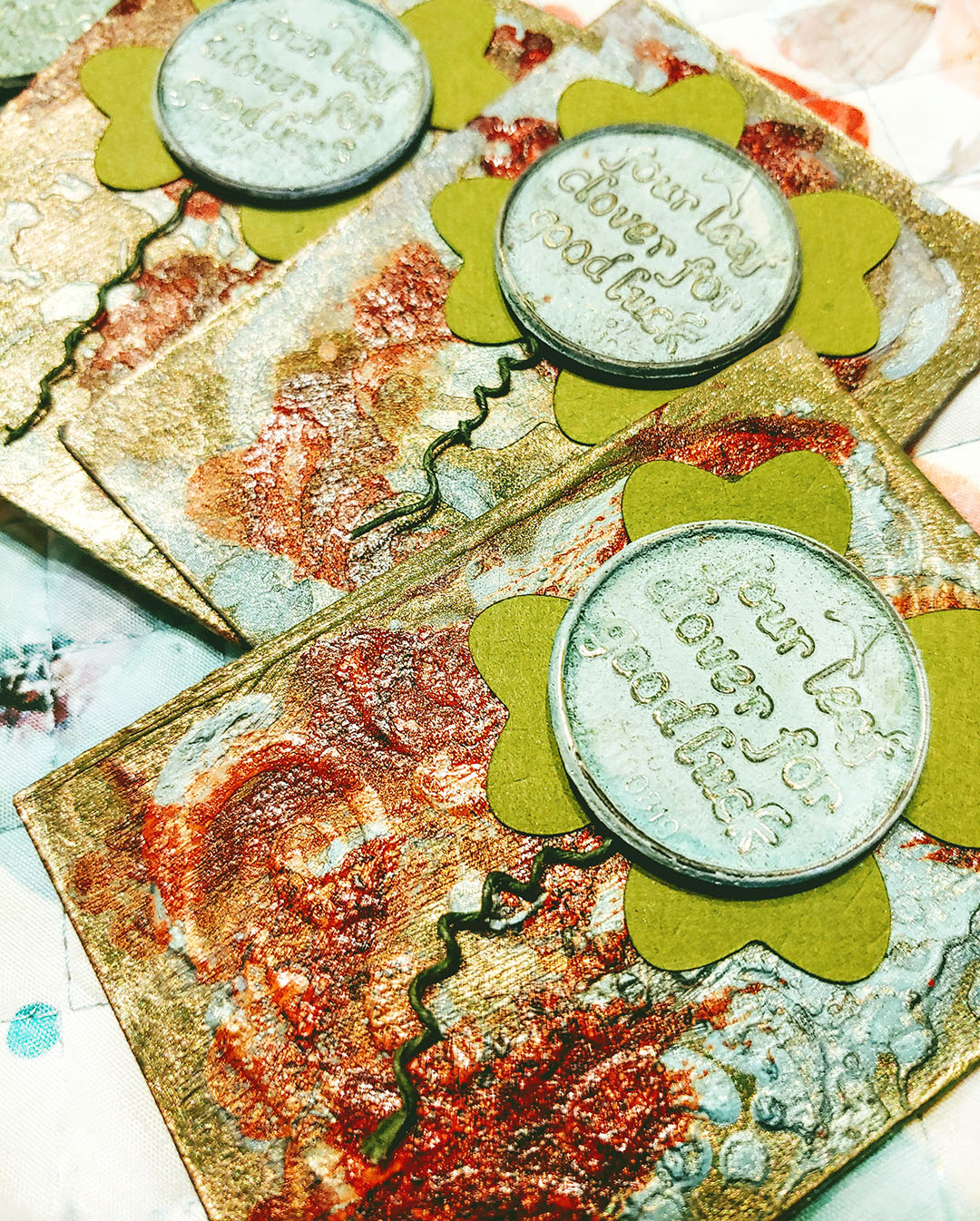
In today’s tutorial, I create an art piece with upcycled remodel leftovers. I had discarded unfinished pieces of wooden blocks, my neighbor gave me when he did some home renovations. I covered a wooden block with plaster cloth and created a wall hanging piece using Joy Clair stamps with VersaFine CLAIR ink and used All-Purpose inks for the background. Plaster is porous and these inks are highly pigmented, thereby, allowing the inks to adhere to the plastered surface easily. You get a little bit of uneven surface with a distressed look, which I really like.

Skill: Intermediate
Time: 30 Mins to plaster and color the wooden substrate + 2 days for plaster to dry

Directions


Step 1

For this project, you will need plaster cloth, wooden substrates, such as a cradled board (shadowbox) or block, water and scissors. The plaster can be messy and a little dusty. Line your table with a plastic bag, which makes it easier to clean up. Do not use hot or warm water. It will speed up the setting up of the plaster. Plaster is water-soluble, so cleaning is easy and fast.
DO NOT throw the plaster water in your sink, it will set in your plumbing and clog it. You’ll have small or fine pieces of plaster leftover in the water. You can throw the water out in your yard. Plaster is Gypsum stone, it exists in nature. Another option is to drain the water out and you are left with plaster pieces that can be thrown away in the trash.


Step 2

Dip the plaster cloth in water. Hold the cloth tightly in the palm of your hands and wring out the excess water. This will prevent the plaster from completely sloughing off the cloth.


Step 3

Lay it out on your substrate and smooth it out with your fingers. Move quickly, plaster tends to set fast. Once it begins to set, there is no way to smooth it out. If you try you just get a bumpy surface.


Step 4

Allow the piece to dry for a whole day. The rate it dries will depend on the temperature of the room. The drier, warmer the room, the faster it dries.


Step 5

Brush on the Sand All-Purpose ink. Lay a little drop on the inkwell, dip the brush in water and brush onto the piece. Plater is highly porous, so a little goes a long way. The plaster will get activated, just a little. Dry the piece between each layer. The color will be lighter once dry.


Step 6

Brush on the Tropical Lagoon All-Purpose ink. Dry the piece with a heating tool or allow it dry naturally before stamping.


Step 7

Stamp images with the Nocture VersaFine Clair. Despite smoothing out the plaster, you still have a little bit of an uneven surface; that is the nature of plaster cloth. I find that VersaFine Clair ink to be perfect for plaster. It’s highly pigmented, moist and it captures details very well, ideal for allowing the ink to get into the uneven surface easily. It is best to use unmounted stamps because it makes it easier for the stamps to go through the uneven surface by pushing the stamp into the surface with your fingers.

Supplies

Imagine
Other
  • Plaster Cloth
  • Finished or Unfinished Wood
  • Joy Clair – Butterfly Kisses stamp set
  • Acrylic Block
  • Mixing bowl
  • Paintbrush
  • Paint Palette

Quick & Easy: Embossing and Watercoloring Technique

by Elina Stromberg

Heat embossing is an easy but versatile technique that will bring your stamped projects to a new level. You will be amazed how easily this technique will transform your stamped images into shiny, non-fading, water-resisting decoration elements! Most crafters use heat embossing together with stamps, but this technique can also be used in various ways to create cool effects on your project backgrounds.

For heat embossing you don’t need too many supplies; embossing powder, a sticky stamping ink, and a heating tool will take you a long way. A heating tool (or a heat gun) is a dryer that blows very hot air. The temperature is much higher than of a hairdryer, so be careful not to touch the nozzle as it may burn your fingers! The magic of heat embossing is in the melt, and the embossing powder will need heat to start melting. Therefore, a hairdryer cannot be used for this purpose as the air is simply not hot enough. The results of heat embossing are gorgeous; it’s almost like magic on paper! Even if you don’t have too much experience of paper crafting, I recommend you give this technique a try; it’s so easy that you will master it in no time at all!


VersaMark

Mboss in Black

Watercolor Set

Waterbrush

Acrylic Block by Stampin’ Up


Stampin Up – Beautiful Day

Stampin Up Cardstock

Heat Tool

For heat embossing, you need an ink that is sticky. The ink acts as a glue and the fine embossing powder sticks to the ink until it’s melted. My personal preference for this technique is VersaMark as it dries slowly allowing me to work at my own pace without any rush. I can also stamp several images on one go without worrying for the ink to dry too quickly.
Stamp the image on white paper. I used a smooth watercolor paper, as I wanted to color the embossed image with watercolors.

Place your stamped paper on a piece of scrap paper (a sheet of printing paper will do great). Sprinkle a generous amount of embossing powder over the stamped image. Lift the stamped cardstock and pour the leftover embossing powder onto the scrap paper. The powder sticks to the sticky ink. Tap the stamped cardstock a couple of times to get rid of more excess powder. Set the stamped paper aside and funnel the leftover powder back into the container. The leftover powder can be used over and over again! If for some reason the powder would stick on unwanted areas, you can brush off the excess powder with a small paintbrush before heat setting the powder.

Keeping the heating gun nozzle a few inches away from the cardstock, heat the embossing powder until it’s completely melted. Be careful not to overheat it. You will notice when the powder starts melting as it turns from matt grainy to smooth and shiny.

Paint the embossed image with watercolors. The heat embossed image resists watercolors, allowing you to block colors from mixing.
 I decided to use the butterflies for decorating cards, so I cut them out with scissors. I glued two panels of patterned papers on a simple white card base. For making my beautiful butterflies pop I added simple heat embossed texture on the background: 
I started with dabbing clear VersaMark in on the center of my background. On my first card, I used white embossing powder for the background, and for the second one gold. Heat embossing is an easy way to add a hint of metallic shimmer to your card! Once the powder had cooled, I glued the butterfly on the card front. Done!